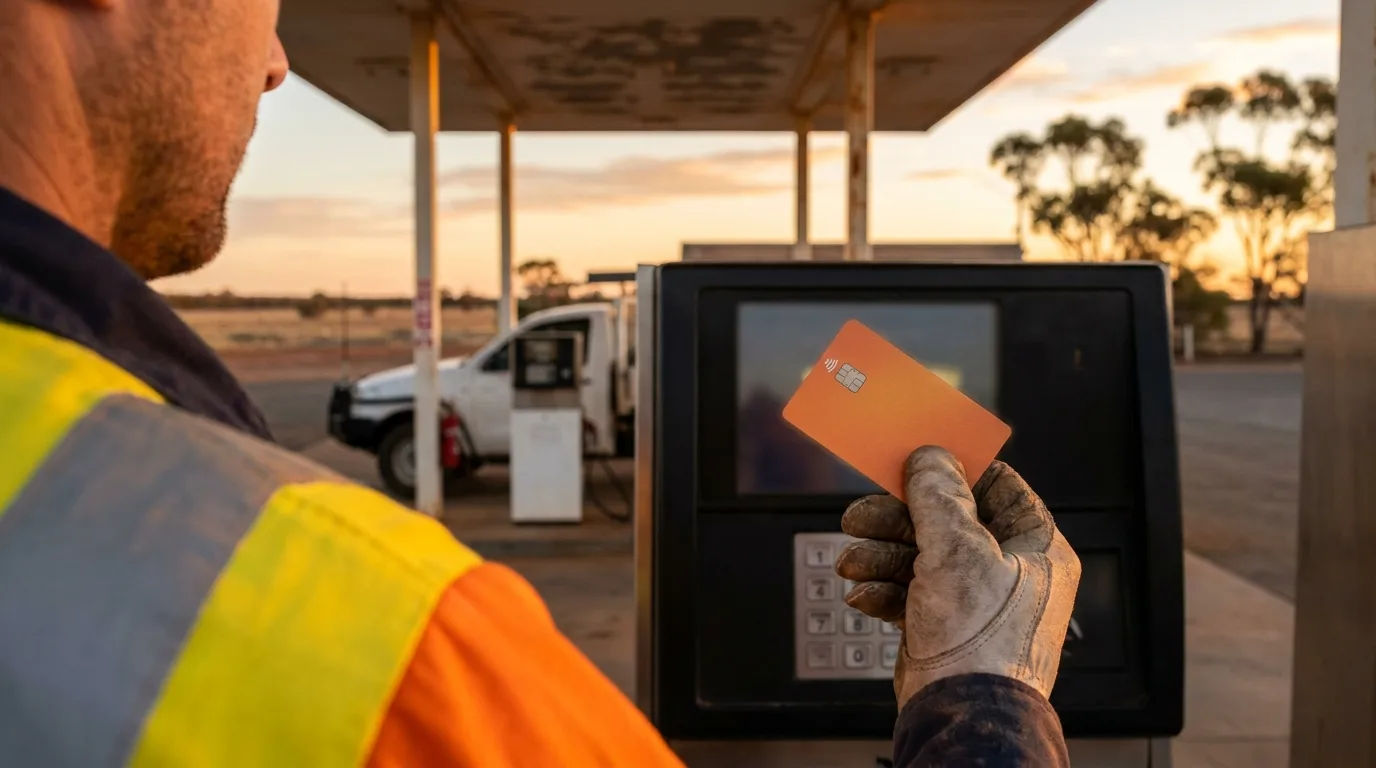
An owner can compare rewards, dashboards, and spending controls for an afternoon and still miss the question that determines whether a fuel card will work on Monday morning: can the drivers use it on the routes they actually run? For a small business, network coverage is not a logo count or a national map. It is the set of places a specific vehicle can refuel without adding a detour, delaying a customer appointment, or forcing an employee to improvise. Owners can check station-based programs, such as the Speedway cards at speedwayfleetcards.com, against those routes.
That makes location planning a better starting point than provider comparison. A plumbing crew that works within one metro area has a different coverage problem from a landscaping business that sends trailers across county lines. A catering company may need stations near an early-morning loading route; a cleaning company may need access after an evening shift. The card should support the operating pattern already on the calendar, not require the business to reorganize work around a payment tool. A program serving gas stations and diesel lanes, such as Exxon Mobil fleet cards for small business fleets, can help when crews run both kinds of vehicles.
Pull a month of real driving history
Begin with the evidence the business already owns. Look at dispatch records, customer addresses, delivery zones, mileage logs, and the last several weeks of fuel receipts. Mark the usual starting points, the corridors vehicles use most often, and the places where drivers have stopped when a job ran long. The goal is a route inventory, not a perfect travel model.
Transportation activity is large enough to show why local detail matters. The Bureau of Transportation Statistics reported that the U.S. transportation system moved about 20.0 billion tons of freight in 2024. A small firm represents only a tiny portion of that movement, yet its own miles have patterns: peak days, recurring destinations, seasonal work, and the occasional emergency trip. Those patterns should be the test cases for a card network.
Create three lists. The first is essential locations: stations close to regular routes or work areas. The second is acceptable backup locations: stops that are slightly less convenient but still practical. The third is risk locations: places a driver may need to reach when a schedule changes, weather intervenes, or a customer request extends the day. A provider may cover the first list and still leave the business exposed on the third. Knowing that difference before signing is more valuable than discovering it during a declined transaction.
Measure detours as operating cost, not inconvenience
An out-of-network stop is not merely a failure of convenience. It can consume driver time, add mileage, complicate payroll, delay a job, or create a receipt that must be handled outside the normal process. Those costs will vary by business, which is why an owner should estimate them using actual routes rather than a generic per-gallon saving.
The Federal Highway Administration calculated that the average registered vehicle traveled 11,071 miles in 2024. That national figure is not a target for any one business. It does underline the cumulative effect of small route choices. A few extra miles may be insignificant on one afternoon but meaningful when repeated by several vehicles over a billing cycle. The right comparison is not “Does this network have many stations?” It is “How often would our normal work require a detour, and what would that detour interrupt?”
Ask drivers to identify the constraints a map will not show. Some locations are difficult to enter with a trailer. Some have long lines at a time when a driver is trying to make a customer window. Some are technically nearby but sit on the wrong side of a congested route. Others are easy to use only for passenger vehicles. Driver input turns a coverage review into a realistic operating decision.
Test the card at the hours the business works
Coverage has a time dimension. A station can appear on a provider’s directory yet be unhelpful if a vehicle needs fuel before it opens, if a particular pump configuration is unavailable, or if a driver cannot use the accepted payment method during a late shift. The network audit should include opening hours, overnight access where relevant, and the business’s own demand peaks.
Fuel price changes also make an abstract nationwide comparison less useful than a route-specific plan. The Energy Information Administration reported that regular gasoline averaged $3.30 per gallon nationally in 2024, while its regional averages ranged from $2.89 on the Gulf Coast to $4.18 on the West Coast. The point is not to predict a future price. It is to recognize that regional conditions, taxes, and supply create different economics for different small businesses. A card program should be evaluated with the stations and areas the company uses, not with a single national assumption.
For each essential route, identify one primary fueling point and one backup. Record what a driver should do if both options fail: call a named contact, use an approved alternate method, retain the receipt, and report the exception promptly. This process protects the customer schedule while preserving the transaction detail the office will need later.
Compare provider directories against field reality
Once the route lists are complete, compare them with current provider information. Confirm the stations, merchant types, card acceptance rules, and any restrictions that apply to the particular program. A directory can change, and a brand name alone may not tell a driver whether a specific location will accept a given product.
Do not stop at the office neighborhood. Check the locations around major clients, job clusters, warehouse runs, airport routes, and the boundary of the business’s normal service territory. If the business serves several markets, repeat the audit for each one. A network that is excellent in one area may be a poor fit in another.
Then run a small field test. Give a limited group of drivers the proposed card and a defined list of locations to try during ordinary work. Ask them to note acceptance, access, receipt quality, and any extra time required. The pilot is not a survey about whether drivers like a new card. It is a controlled test of whether the coverage model matches real movement.
Build exceptions into the policy before they happen
Even a good network will have exceptions. A driver might be rerouted, assigned a replacement vehicle, or sent to a customer outside the normal area. The business needs a policy that explains what happens then. Without one, the owner ends up reviewing a surprise charge weeks later with no context.
The policy can be short: use the assigned card and normal locations when possible; if a route requires another option, contact the designated supervisor when practical; retain a receipt and note the vehicle, driver, reason, and job. The point is not to punish a reasonable decision in the field. It is to separate an understandable exception from a transaction the business cannot explain.
Review those exceptions every month. If the same location or route appears repeatedly, it may be time to adjust the network choice, driver instructions, or service-area planning. A one-time fallback is normal. A recurring fallback is evidence that the original coverage assumption was wrong.
Decide from the route evidence
A small-business fuel card earns its place when drivers can use it without changing sensible routes, the office can identify the vehicle and purpose behind each purchase, and exceptions are visible early rather than discovered at close. If the local station list fails that test, a long feature list will not rescue the program.
Build the route list, test essential and backup locations, run a limited pilot, and review the result. Coverage is the foundation for every control and receipt rule.