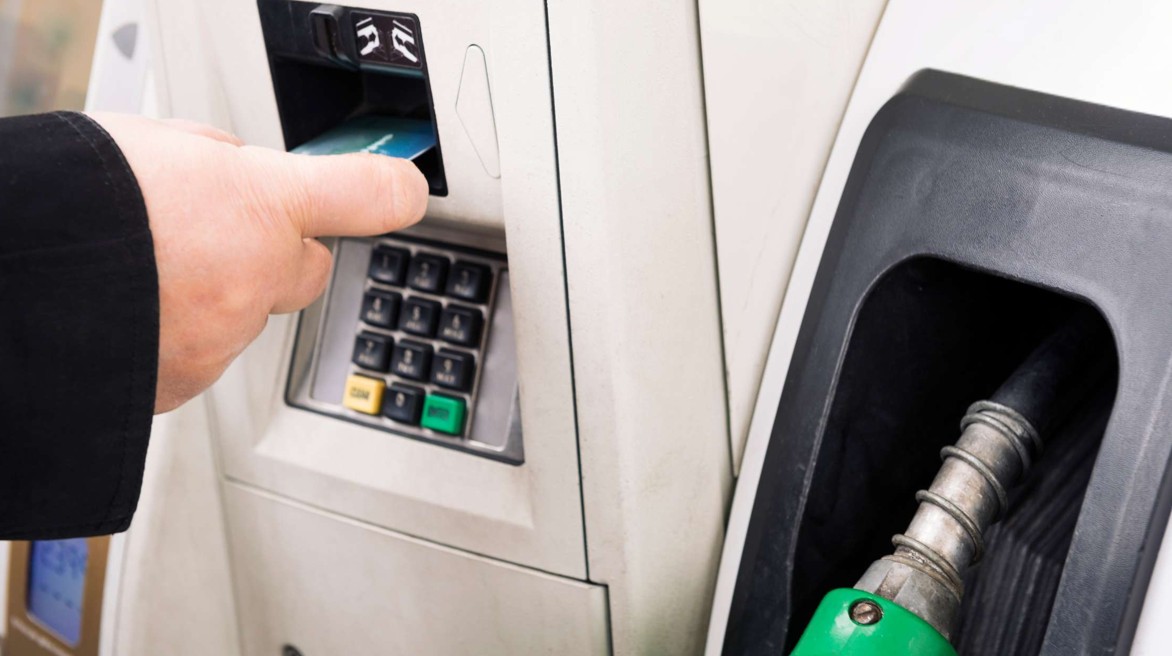
The most useful fuel-card control is rarely the strictest one. It is the control that makes an ordinary, authorized purchase easy while making an unusual purchase visible early enough to investigate. A program that declines too many legitimate transactions teaches drivers to work around it. A program with no meaningful rules leaves a fleet manager sorting through receipts after the money has left the account. Businesses with vehicles in Canada can review Esso and Mobil card options at www.essobusinesscards.ca before deciding which purchases to allow.
The design challenge is to connect a purchase to enough context to judge it. Who used the card? Which vehicle was assigned? What product was bought? Where and when did the transaction occur? How much fuel would be plausible for that vehicle and route? Brand programs such as Exxon Mobil fleet cards for gas and diesel purchases can capture some of that context at the pump, but the business still sets the rules. The answers produce a control system that supports field work rather than policing it from a spreadsheet.
Start with a real exception, not a generic fraud warning
Imagine a card record that shows two fuel purchases four minutes apart, at stations on opposite sides of town, after the driver’s scheduled shift. A fleet manager should not need to guess whether the transaction is a duplicate, a data delay, a swapped vehicle, or an unauthorized purchase. The account should surface enough information to begin a quick review.
That is the value of a well-designed exception. It gives a reviewer a defined question and an evidence trail. IBM’s 2024 Cost of a Data Breach Report put the global average breach cost at $4.88 million. Fuel-card misuse is not the same as a data breach, but the figure is a useful warning against treating account security as an afterthought. Financial controls work best before an anomaly becomes a loss.
Link the card to a driver and a vehicle
Assigning a card to a driver creates accountability. Assigning it to a vehicle or vehicle group adds operational meaning. A driver may switch vehicles during a week, but the change should be recorded. Otherwise, a manager cannot compare gallons to tank capacity, mileage, route, and expected fuel type.
Use a driver identifier or PIN that is not casually shared. Keep vehicle assignment current when equipment is reassigned, sold, repaired, or added. Give supervisors a controlled way to issue a temporary card or approve a reassignment. The goal is not to make every schedule change a paperwork event. It is to avoid the blank space in which a transaction cannot be tied to a responsible user and vehicle.
Set up an offboarding routine too. Suspend cards promptly when an employee leaves, a contractor finishes work, or a vehicle comes out of service. Review cards that have not been used for an extended period. Dormant credentials are easy to forget and difficult to explain later.
Use product and quantity rules to create useful signals
Product restrictions are a direct way to reduce error. A gasoline vehicle should not normally buy diesel; a diesel unit should not normally buy gasoline. Some fleets also need to decide whether convenience-store items, car washes, maintenance products, or nonfuel purchases belong on the account.
Quantity limits deserve more thought than a single dollar cap. A fixed dollar maximum can become meaningless as prices change. A limit tied to vehicle capacity, fuel type, time since the last purchase, or assigned route can be more informative. If a manager does use a dollar ceiling, review it routinely so an ordinary market change does not trigger widespread declines.
PwC’s 2024 Global Economic Crime Survey found that 41 percent of respondents had experienced fraud or other economic crime in the prior 24 months. A fleet account is a business tool, not a consumer account, but the underlying lesson applies: a payment method should preserve enough purchase detail to spot a pattern. A report that only shows a total amount offers far less protection than one that preserves product, quantity, location, card, and authorization time.
Match time and location settings to the workday
Time controls can catch a suspicious purchase, but they can also block a normal emergency call. Divide the fleet into work patterns. A weekday service team might use a narrow fueling window. An on-call technician, overnight delivery team, or snow-removal crew needs a different rule.
Location settings should be equally practical. Use geography to identify improbable transactions or support a preferred network, not to force a driver away from safe or necessary fueling. Pair a location rule with a documented exception process. A dispatcher who can approve a one-time variation is better than a driver who must use a personal card and explain it later.
Review controls after route, customer, or staffing changes. A limit that matched the fleet six months ago may no longer reflect new territories or equipment.
Give alerts an owner and a deadline
An alert is not a control until someone reviews it. Decide which events trigger an immediate response: a lost card, a purchase after a card was suspended, a transaction far from the assigned route, a prohibited product, or an unusually large quantity. Then assign ownership.
The Association of Certified Fraud Examiners estimated in its 2024 Report to the Nations that organizations lose 5 percent of revenue to occupational fraud each year. That estimate does not measure fuel-card misuse specifically. It does reinforce why organizations should not rely on a single annual review to find payment irregularities. A short, consistent review loop is usually more valuable than a dashboard nobody opens.
Set a response standard for each alert class. For example, a declined card could be resolved within a shift; a possible duplicate purchase might be reviewed the same day; a disputed transaction may require receipts, driver confirmation, and provider contact. Make sure the reviewer can document the outcome. Otherwise the same alert returns every month with no institutional memory.
Preserve transaction evidence for the accounting team
A good control design also helps accounting. Each transaction should retain the fields needed to reconcile an invoice, charge a cost center, respond to a tax question, or investigate a dispute. At minimum, that normally means driver, vehicle, date, time, location, product, quantity, unit price, total, and any exception code.
Do not ask drivers to duplicate data the card program already captures. Instead, make sure the fields that must come from the driver, such as a job number or odometer reading, are simple to enter and easy to validate. If a required prompt routinely produces bad data, redesign the prompt rather than treating the error as a driver problem.
Test controls with legitimate edge cases
Before enforcing a new rule across the account, test it against the situations most likely to cause trouble: a late route, a replacement vehicle, a pump outage, a driver who begins a shift in one territory and ends it in another, or an emergency fuel purchase.
Ask drivers and dispatchers to report false declines and unnecessary prompts during the pilot. A control that causes recurring operational disruption needs adjustment. The aim is a program that catches true anomalies while preserving a straightforward path for legitimate work.
Review the system as routes and risks change
Fuel-card controls should be reviewed when the fleet gains vehicles, adds a territory, changes fuel types, or sees a pattern of exceptions. Check inactive cards, driver assignments, time windows, limits, alert owners, and dispute records. Compare the data with actual operating conditions, not an old policy document.
The result should be a balanced system. Drivers know what is permitted. Managers see unusual purchases quickly. Accounting receives defensible transaction records. The business can intervene when something is wrong without making every fuel purchase feel like a problem.