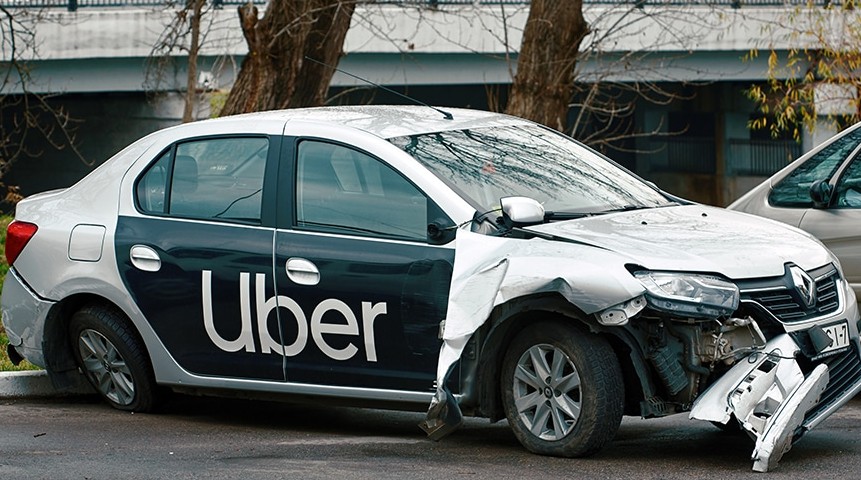
An Uber or Lyft collision can trigger different insurance depending on the driver’s app status at the moment of impact. Boise rideshare accident attorneys can preserve platform records, review personal and company policies, investigate negligence, and determine which carrier should handle an injury claim. Car accident attorneys must analyze the driver’s digital status because the rideshare logo alone does not answer the coverage question.
Begin with the driver’s digital status
Idaho law separates rideshare activity into distinct periods. The driver may be offline, logged into the transportation network company’s system and waiting for a request, traveling to pick up a passenger, or carrying a passenger on a prearranged ride.
An offline collision is generally evaluated under the driver’s personal automobile policy, subject to its terms. Once the driver is logged into the platform, Idaho Code section 41-2519 requires insurance that recognizes transportation network company use.
App records are therefore central. Preserve the trip receipt, driver profile, pickup and destination, timestamps, messages, and platform crash report. Screenshots help, but the platform’s underlying data may be needed if status is disputed.
Coverage while the driver is waiting
When a participating driver is logged in and available for requests but has not begun a prearranged ride, Idaho requires primary automobile liability insurance of at least $50,000 for bodily injury or death per person, $100,000 per incident, and $25,000 for property damage.
The driver, transportation network company, or a combination of both may satisfy that layer. A personal insurer may still raise a rideshare or commercial-use exclusion. The platform carrier may request proof that the driver was actively logged in.
The correct response is evidence, not assumption. App login records, phone data, and platform communications can establish the activity period. Written coverage positions show why a carrier believes a policy applies or does not.
Coverage during a prearranged ride
Idaho requires at least $1,000,000 in primary automobile liability insurance while the driver is engaged in a prearranged ride. That period includes the platform-defined trip activity governed by the statute and policy.
The higher limit does not guarantee payment. A claimant still must establish negligence, injury causation, damages, and coverage. The carrier may dispute which driver caused the crash or whether particular treatment was related.
Passengers should report the collision and keep the ride record, but they should not sign a release without understanding its scope. A small initial payment could be tied to language that resolves a broader bodily injury claim.
When another driver causes the collision
If a third-party motorist hits the rideshare vehicle, that driver’s liability policy is a primary focus. The rideshare policy may still matter if the responsible driver is uninsured, underinsured, unidentified, or coverage is otherwise disputed.
Multiple carriers may investigate simultaneously. One can contest fault, another can challenge the app period, and another can question medical causation. Consistent, accurate reporting helps avoid unnecessary conflicts among the claim files.
In a hit-and-run, promptly document the unknown vehicle, direction of travel, witness contacts, and available video. Report the incident to law enforcement and comply with relevant policy notice requirements.
Negligence still controls liability
Rideshare status identifies insurance; it does not determine fault. The crash may have been caused by the Uber or Lyft driver, another motorist, a commercial carrier, a vehicle owner, or several parties.
The liability investigation examines traffic duties, driver conduct, road conditions, and causation. Evidence can include the police report, scene photographs, witness accounts, traffic video, vehicle damage, event data, phone records, and reconstruction.
Idaho’s comparative negligence rule can reduce compensation when an injured driver shares responsibility. A passenger is less likely to be blamed for vehicle operation, but disputes can arise over medical causation and damages.
Preserve platform-specific evidence
Transportation network companies can hold login history, accepted-trip details, route data, communications, driver records, and internal incident reports. The driver’s phone may contain navigation activity and app notifications. Some of that information can be overwritten or retained for a limited period.
A preservation request can identify the data that should not be destroyed. If litigation begins, subpoenas and discovery may provide additional access. The correct company entity and insurer must be identified so requests reach the proper recipient.
The driver’s proof of coverage also matters. Idaho law requires a transportation network company driver to carry proof of the required coverage during platform use and to disclose whether the driver was logged in or on a prearranged ride when requested after an accident.
Document injuries and financial loss
Rideshare collisions can cause whiplash, fractures, traumatic brain injury, spinal injury, internal injury, or disability. Medical records should show symptoms, diagnoses, treatment, work restrictions, and future-care recommendations.
Keep medical bills, health-insurance statements, wage records, property documentation, and transportation expenses. A passenger may have damaged luggage, electronics, or other property. An injured driver may have vehicle loss and interrupted earnings.
Potential damages can include medical expenses, future care, lost wages, reduced earning capacity, property loss, pain and suffering, disability, and other losses recognized by Idaho law. Wrongful death claims require separate analysis.
Coordinate settlement negotiation
An organized demand explains the app period, identifies the applicable policies, proves negligence, and presents medical and wage evidence. It should address any comparative fault allegation and explain why the claimed damages are connected to the collision.
Carriers may disagree about priority. The personal insurer may point to the platform policy, while the platform insurer examines whether the app was active. Counsel can request written decisions, compare policy language, and prevent a claimant from being passed between adjusters without resolution.
Do not release one party until the effect on other claims is understood. A settlement with the third-party driver may affect an underinsured motorist claim. A platform release may name the driver, company, affiliates, and insurers.
Litigation may be needed to obtain records
When liability, damages, or coverage cannot be resolved, a lawsuit can permit formal discovery, depositions, expert analysis, and court rulings. Litigation can compel production of platform information and clarify the relationship among the parties.
A filed case may still settle after the evidence is exchanged. Preparing for trial can improve negotiation by replacing assumptions with testimony and records.
Use a status-based claim strategy
A Boise rideshare claim should answer the questions in order: Who caused the crash? Was the driver offline, waiting, or on a prearranged ride? Which policies apply? What injuries and losses are supported? What evidence must be preserved?
That sequence keeps the case focused. It also helps ensure the demand reaches the correct carrier, uses the proper coverage layer, and accounts for every responsible party before settlement or litigation ends the claim.